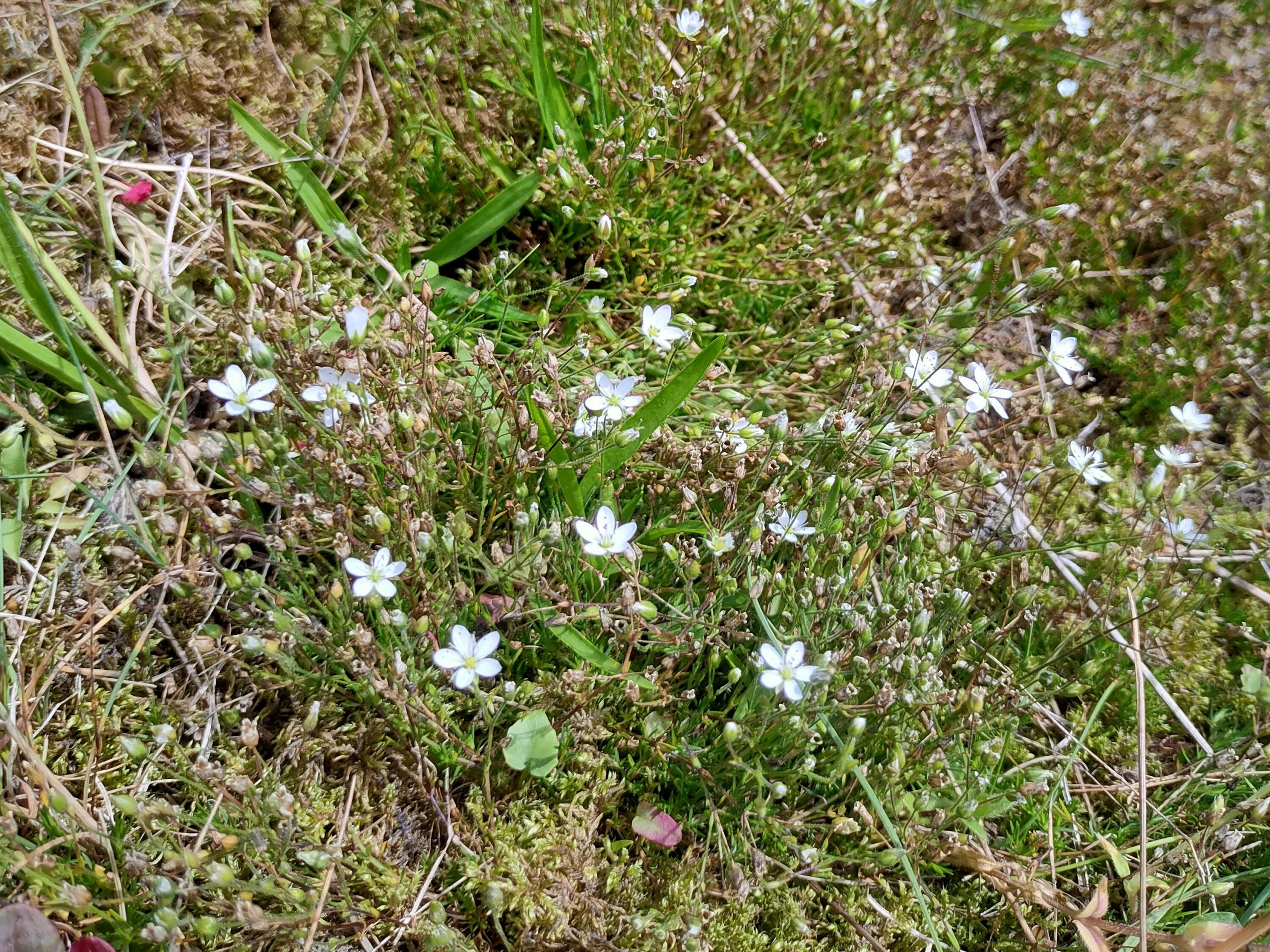
A Spring Sandwort BHS
Lancashire hosts a great variety of habitat many of which is uncommon or rare. Such sites are typically designated as Biological Heritage Sites (BHS). Such habitat also includes many artificial sites created as a result of the industrial heritage of the County.
Disused mines and quarries form a significant component of these artificial BHSs and can support a variety of priority species and unique species assemblages. Once such species is Spring Sandwort (Minuartia verna). This species is considered nationally scarce and is generally restricted to limestone habitat such as limestone pavements, rock, scree, and rocky calcareous grassland. It can also persist in spoil rich in heavy metals such as lead.
I was fortunate enough this week to visit once such site supporting one of the few known populations of this species in Lancashire. The site is sloped grazed pasture on exposed Limestone which has been quarried and mined to some extent. Much spoil has been deposited on flatter ground near a shallow beck. The spoil mounds are diverse with thin soils and support, among other species extensive patches of Wild Thyme (Thymus drucei), Mouse-ear Hawkweed (Pilosella officinarum), Cat’s-ear (Hypochaeris radicata), Fairy Flax (Linum catharticum), Harebell (Campanula rotundifolia), and Common Bird’s-foot-trefoil (Lotus corniculatus).
The Spring Sandwort itself could be found in more open areas of loose spoil devoid of much other vegetation. Here it had formed extensive flowering patches (around 50% of which had gone over). From a distance the small white flowers of single plants might be confused with Fairy Flax, which occurs in similar habitat, but on the more bare and exposed ground the colonies of this densely tufted wildflower were quite striking.
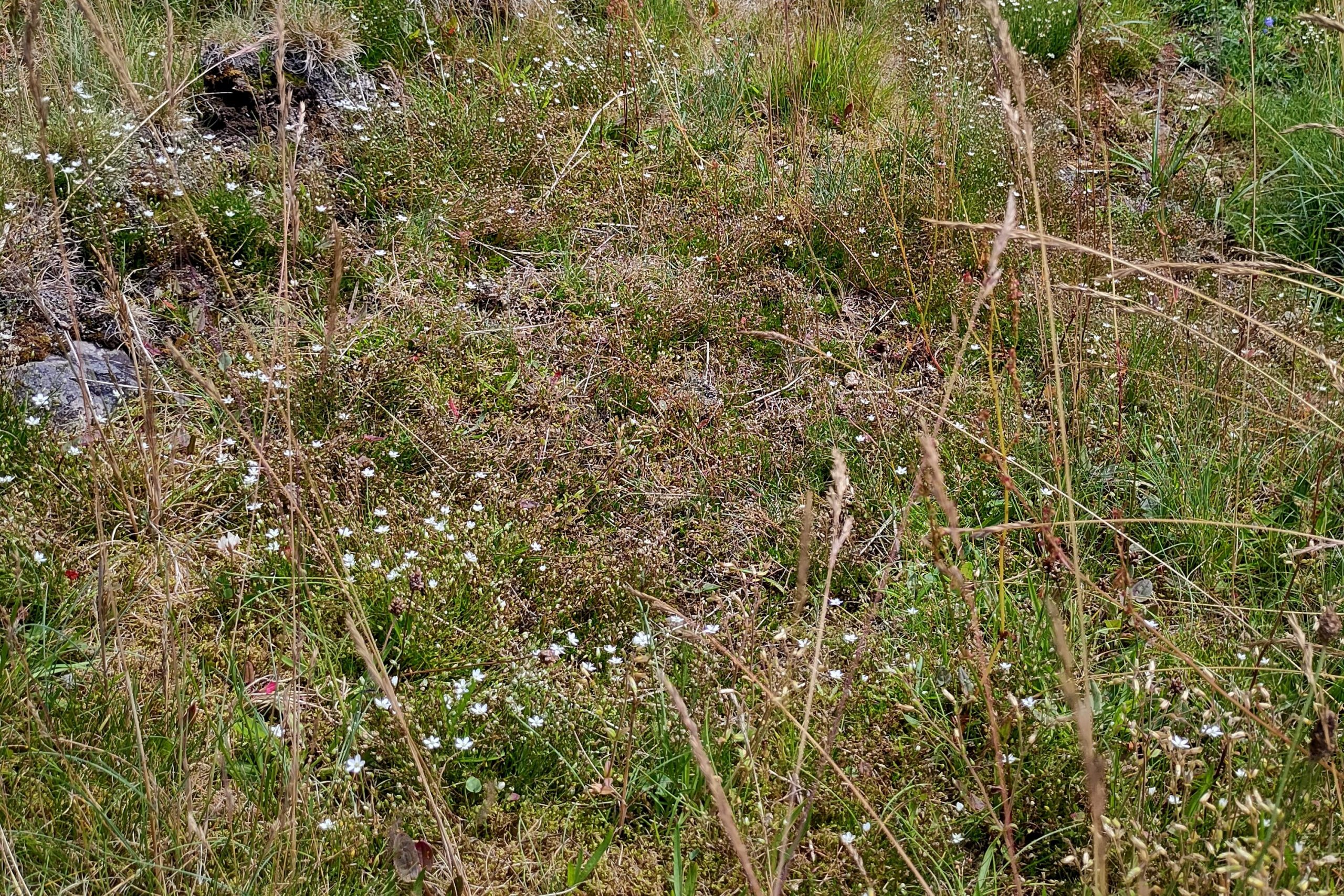
This site has been listed variously for its archaeological and geological heritage but is not recognised for its biodiversity beyond the BHS designation. This species and site highlights the importance of the BHS system in flagging these important wildlife sites as well as the importance of checking industrial heritage or ‘brown field’ sites for rare species before potentially damaging decisions are made.
Fortunately in the case of this site the owners are kind enough to provide access and recognise the importance of the wildlife here but for many areas of Lancashire we simply do not know what is out there.
If you do happen across interesting wildlife then please always send in a photo record to the publically accessible iRecord where the likes of our team, the Lancashire records centre and the Botanical Society for Britain and Ireland (BSBI) can access it.
More information on Spring Sandwort can be found via the BSBI 2020 Atlas: https://plantatlas2020.org/atlas/2cd4p9h.vefwr1


 using WordPress and
No responses yet