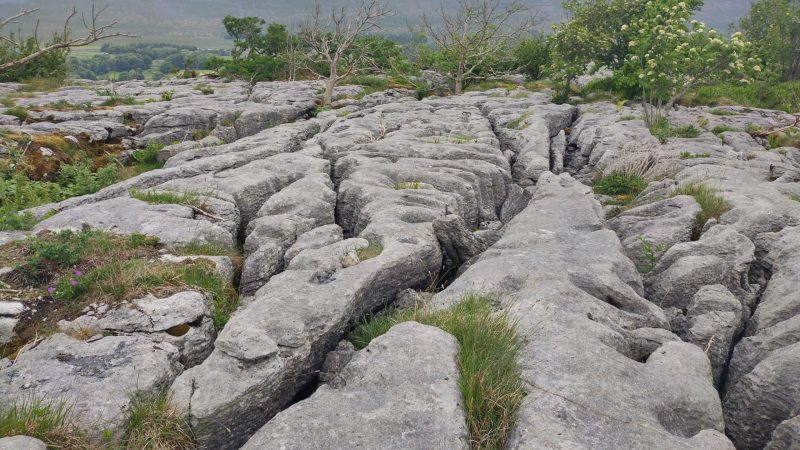
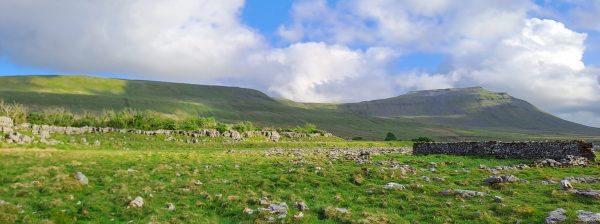
Ingleborough National Nature Reserve has a way of pulling you in before you’ve even taken your first step. Its sweeping slopes and dramatic limestone scars hint at the richness tucked into its folds — and on a recent staff team day out, I had the chance to explore that richness up close.
A Landscape Explained by the People Who Shape It
Our guide for the day, the reserve’s conservation manager Steve Ryder, led us across the site with the ease of someone who knows every contour. As we moved from calcareous to neutral meadows, onto blanket bog and heath, and once we could be dragged onward from our relentless botanising, onto the iconic limestone pavement. Steve explained how each habitat is managed: the delicate balance of grazing, hydrology, and restoration that keeps rare species thriving. As much learning from the habitats and what worked as much as anything else.
We spent some time talking to Sally who told us about the behaviour of her all important cattle and how they responded to the site and the habitats present and how different breeds would behave in different ways on a piece of land, in turn impacting species and habitat which relied on the grazing pressure.
They explained how the cattle needed shelter and the importance of scrub on the reserve despite the resulting conflict with condition assessments of some areas of grassland. Scrub bringing all important shelter for the cattle, structure and diversity for many species but regarded on paper to be detrimental to the needs of the grassland species.
It was conservation not as a concept, but as a living, breathing practice and from here we walked out to see more of the result of their work.
Wetlands Painted With Orchids and Buttercups
The wetland was the first real showstopper. Within minutes, orchids began appearing like scattered jewels in the grass. Spikes of Early Purple Orchid (Orchis mascula) seemed ever present and i couldn’t help by check for any that might be its lookalike the Green-winged Orchid (Anacamptis morio), no such luck despite almost convincing myself that a plant lacking leaf spots, and any scent.. might just be the thing.. Common Spotted Orchid (Dactylorhiza fuchsii), Heath Orchid (Dactylorhiza maculata), Heath Fragrant Orchid (Gymnadenia borealis) and a wealth of other Marsh Orchids (Dactylorhiza spp.) instead captured my interest and i couldn’t help but scour the area for further rarities. Steve instead pointed me to the crown jewel, a new first for me, the Small-white Orchid (Pseudorchis albida) with it’s tiny spikes of dense white flowers just about to burst into flower.
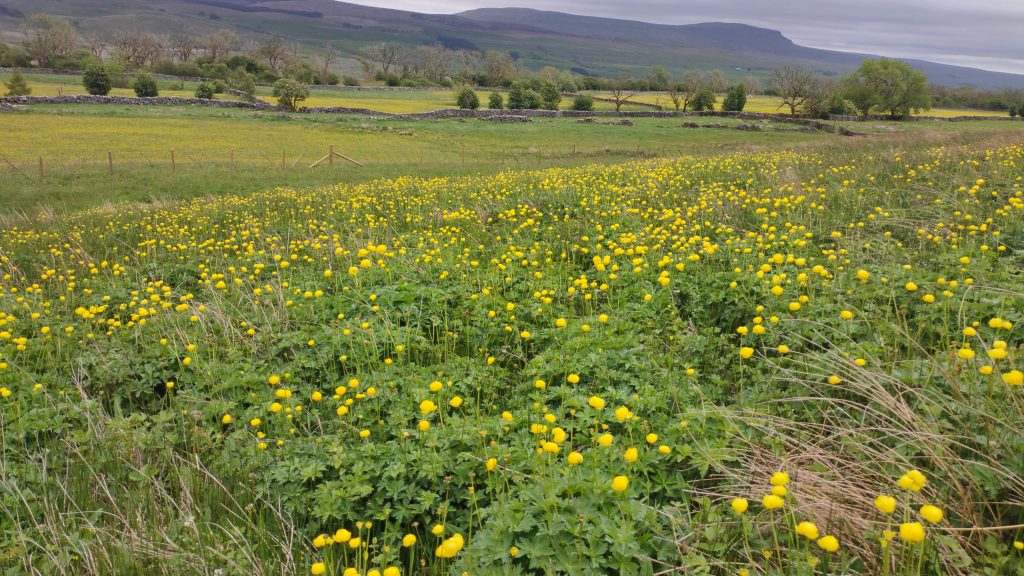
The next field over was just as exceptional, Globeflower (Trollius europaeus) dominated the scene in bold yellow drifts, a species i have searched for and a priority in Lancashire but one which i have never seen so extensively. It was joined in it’s vastness by Goldilocks Buttercup (Ranunculus auricomus) and to our surprise a patch of numerous Common Twayblade (Neottia ovata). It was a botanical spectacle — the kind that makes you slow your pace without even realising.
Bog Specialists: Tough Plants in Tough Places
Heading up slope and on the blanket bog, the species list shifted again. Steve showed us how the impact of removing grazing for the last 25 years had allowed the re-establishment of Heath and Bog communities, Heather (Calluna vulgaris), Bilberry (Vaccinium myrtillus) and it’s associate Green Hairstreak (Callophrys rubi) now abundant with Creeping Willow (Salix repens) and so much more returning. Indeed as we talked a Stonechat, likely irate at our presence called from a wall nearby.
This compared to the still grazed reserve showed markedly different plant communities. Steve took us through their future plans for restoration, similar to ‘over-the wall’ and highlighted efforts to block the numerous immense gripes draining the bog, often involving helicopters and ground crews to strategically place sandstone blocks and ultimately re-wet the bog.
Lower down we were introduced to more functional conditions where wet bog sat in hollows achieved by wooden rather than sandstone dams on less steep ground. Here we spotted small shoots of Bog Asphodel (Narthecium ossifragum), and (i am informed) Bottle Sedge (Carex rostrata) standing proud over the peat, and the carnivorous duo — (not so) Common Butterwort (Pinguicula vulgaris) and Round Leaved-sundew (Drosera rotundifolia) — glistened in the light, tiny but unmistakably predatory.
These are plants built for hardship, thriving where nutrients are scarce and conditions unforgiving.
Secrets in the Limestone Pavement
I have to admit this bit very nearly didn’t happen, after many hours botanising on the meadow and bog, the trek in between (followed by a cup of tea and some tasty cake), most of us were ready for heading to the pub. However the temptation to visit the nearby pavement soon won out unanimously.
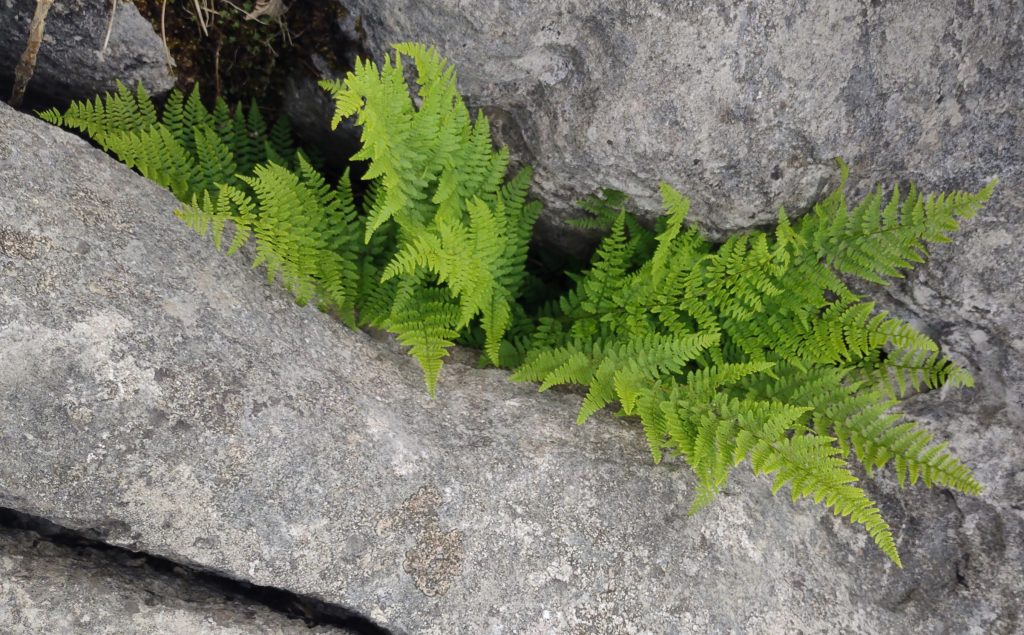
The limestone pavement offered a different kind of drama. Its deep grikes sheltered species that rely on the cool, protected microclimate. Here we found more Globeflower, Lily-of-the-valley (Convallaria majalis) along with a surprise of Baneberry (Actaea spicata), a species which i have not encountered nor was looking for! Rigid Buckler-fern (Dryopteris submontana), Sarah G. pointed out should be present and was eventually discovered, and Mountain Melick (Melica nutans), another species i hadn’t been looking for and saw just as we were leaving, and only identified retrospectively, remarking at the time “..i found something over there that looks like Wood Melick, amazing what turns up on here..” — plants that feel as ancient as the rock they grow from.
It’s a habitat that rewards curiosity. Look closely, and the pavement reveals a world hidden in plain sight.
A Cuckoo’s Call Over the Hills
Throughout the day, a cuckoo called across the reserve — sometimes distant, sometimes close, but always present. It became the soundtrack to our walk, a reminder that this landscape is as rich in sound as it is in colour.
Leaving With a New Perspective
By the end of the visit, boots muddy and cameras full, I realised the day had offered more than a tour. It was a glimpse into the complexity of managing a place where rare species still flourish. Ingleborough isn’t just a nature reserve — it’s a living mosaic, shaped by geology, weather, wildlife, and the people who care for it.
And it’s a place that stays with you long after you’ve left its slopes behind.


 using WordPress and
Comments are closed